
Should you book a massage before or after a workout? In Bangkok, where a sports massage is often cheaper and easier to find than in many home cities, the real question is less whether to book and more when. The same 60 minutes can feel restorative on a rest day and leave your legs flat if it lands the afternoon before a key session.
Compare recovery massage options
Pick the session for your training load and goal, rather than a treatment label.
This guide covers pre-event and post-event massage, how to place sessions across easy and hard weeks, what to do after a marathon and how massage fits alongside sauna or ice baths. If you are new to the service, our sports massage guide explains the basics first.
Pre-event vs post-event: massage before or after a workout
The two serve different purposes, and the techniques should differ too.
| Pre-event | Post-event | |
|---|---|---|
| Typical timing | Shortly before, or one to two days before | From a few hours to a few days after |
| Goal | Feel loose, settled and ready | Feel less sore and stiff, relax |
| Pressure | Light to moderate, brisk | Light at first, deeper only once soreness eases |
| Length | Short, often 15 to 30 minutes | 30 to 90 minutes |
| What to avoid | Long, deep, unfamiliar work | Deep pressure on very sore or injured areas |
What the evidence says about massage before a race
The research on pre-event massage is not encouraging if your goal is better performance. A 2018 systematic review found no evidence that massage before exertion improves maximal strength, sprinting or jumping in healthy young people, and limited evidence that longer passive massage of around 15 minutes may slightly impair sprint performance. Most of the included trials were small and of low quality.
That does not mean a short, familiar pre-race rub is harmful. Many athletes like how it feels, and feeling calm has value. The practical rule is simple: nothing new on race week. If you have never had deep tissue work, the day before a race is not the moment to try it.
What the evidence says about massage after training
Post-exercise massage has better support for how you feel. A 2018 meta-analysis comparing recovery techniques concluded that massage was among the most effective options for reducing delayed onset muscle soreness and perceived fatigue. A 2020 meta-analysis in BMJ Open Sport and Exercise Medicine also found a small reduction in soreness, but no clear improvement in strength, sprint or endurance performance.
In short, post-event massage is reasonably supported for comfort and perceived recovery. It is not proven to make you faster or stronger.
Recovery weeks vs hard weeks
Think of massage timing in terms of your training cycle, not just individual sessions.
During hard weeks
When you are piling on volume, a massage can help you feel less stiff between sessions. Place it after your hardest session of the week or on the following rest day, rather than the evening before a big workout. Keep pressure moderate; a session that leaves you bruised or sore for two days costs you training.
During recovery or deload weeks
This is often the best time for a longer or deeper session. There is no key workout to protect, and any lingering tenderness has time to fade. If you want a therapist to work on a stubborn area such as calves or hip flexors, book it here.
Race week
Keep it light and early. A short, familiar session two to four days before the race is a common approach. Then leave your legs alone and focus on sleep, fluids and rest.
Massage after a marathon
After a marathon or long trail race, your legs have taken real damage, and much of what you feel over the next few days is muscle soreness and fatigue. Cleveland Clinic notes that this kind of soreness usually begins one to three days after hard exercise and rarely lasts more than five days.
A sensible sequence many runners follow:
- Race day: Walk, drink, eat, shower. If an event offers a short, gentle flush massage, it is fine to accept.
- Days 1 to 3: Prioritise sleep, walking and easy movement. If you book a massage, ask for light pressure.
- Days 3 to 7: A longer session at moderate pressure is usually more comfortable once peak soreness has passed.
- Week 2 onwards: Resume your normal massage rhythm as training restarts.
Pain that is sharp, localised, getting worse or still present after a week is not normal soreness. Neither is dark or bloody urine after a race, which needs prompt medical attention. Book a physio or doctor rather than another massage. Our running recovery guide for Bangkok covers the rest of the post-race picture, including heat and hydration.
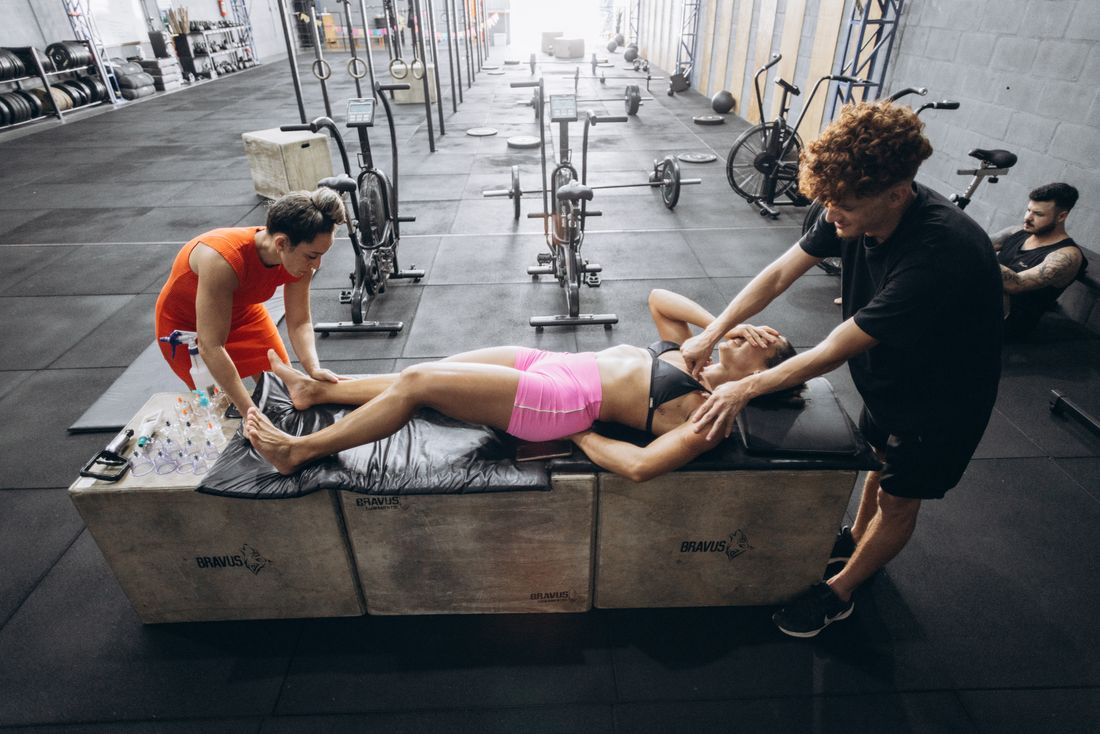
How often is reasonable for sports massage?
There is no research-backed ideal frequency. How often to book a sports massage depends on training load, budget and how your body responds. As a rough guide:
| Training situation | A common rhythm |
|---|---|
| Recreational, 3 to 4 sessions a week | Every 3 to 4 weeks, or as needed |
| Building for a race | Every 1 to 2 weeks during the hardest block |
| Twice-daily training (e.g. Muay Thai camp) | Once or twice a week, lighter pressure |
| Returning from injury | As advised by your physio, alongside rehab |
If you find that weekly deep massage is the only thing keeping you training, treat that as a signal. Persistent tightness often points to load, sleep or technique issues that massage will not fix on its own. Foam rolling and easy movement can cover some of the gap between sessions.
Pressure matters as much as frequency
Frequent, gentle sessions usually fit training better than occasional, very deep ones. Tell your therapist what you did yesterday and what you plan tomorrow, so pressure matches your schedule.
Combining massage with sauna or ice bath
Many Bangkok recovery venues offer massage, sauna and cold plunge under one roof, which makes stacking them tempting.
Sauna and massage
A short sauna beforehand can help you relax and may make muscles feel easier to work on. Cool down and rehydrate before lying on the table, especially in Bangkok's heat; arriving flushed and dehydrated is uncomfortable for you and the therapist.
Ice bath and massage
There is no strong evidence on the best order. Many people prefer massage first and a brief cold plunge afterwards, or keep them on separate days. One point is worth knowing if you lift for strength or size: a 12-week study published in 2015 found that regular ice baths straight after strength sessions blunted gains in muscle mass and strength compared with an active cool-down. If muscle growth is your goal, consider keeping cold immersion away from your lifting sessions.
For more on stacking heat and cold through the week, see our guide to contrast therapy on training and rest days. If you are still deciding which recovery tool suits your goal, our guide to choosing a recovery treatment is a good next step.
Frequently asked questions
Can I lift the day after deep tissue?
Usually yes, but expect the treated muscles to feel tender, and consider training a different body part or lowering the load. If a deep session leaves you sore enough to change how you move, ask for lighter pressure next time and schedule it before a rest day.
Massage or ice bath after a long run?
Both have some evidence for reducing how sore you feel, and neither is essential. Massage tends to suit people who want to relax and loosen up; a short cold plunge suits those who want a quick, inexpensive option. Your choice can depend on time, cost and what you tolerate.
Should I get a massage the day before a race?
Only if it is short, light and something you have done before without problems. A deep or long session the day before a race risks leaving your legs heavy or tender.
Does massage help me recover faster for the next session?
It may help you feel less sore, but studies have not shown clear improvements in strength, speed or endurance at the next session. Sleep, food and sensible training load matter more.
Related guides
- Sports massage in Bangkok: what to know
- Running recovery in Bangkok
- Contrast therapy on training and rest days
- How to choose a recovery treatment
- Sports massage prices and training
This guide is general information, not medical advice. Prices and services change; confirm details directly with the provider. See our editorial methodology and medical disclaimer.
Sources (checked October 2026)
- Is pre-performance massage effective? A systematic review (Int J Sports Phys Ther, 2018) – PMC
- Effect of sports massage on performance and recovery: systematic review and meta-analysis – BMJ Open Sport & Exercise Medicine
- Recovery techniques for DOMS and fatigue: systematic review and meta-analysis – Frontiers in Physiology
- Delayed onset muscle soreness – Cleveland Clinic
- Cold water immersion after strength training and muscle adaptation – ScienceDaily
What do you want to compare next?
Choose the question that matters most. Each option opens a relevant practical guide — no account or form required.
Independent guidance, not a diagnosis or confirmed booking.