
Booking a first reformer session can feel more intimidating than it should. The machine looks like a cross between a rowing ergometer and a hospital bed, the studio is often small, and everyone else seems to know where the straps go. This guide to Pilates for beginners in Bangkok covers the practical side: which class to book, what to wear, what to say to your instructor and what the next two days may feel like.
Compare Bangkok Pilates options
Check class size, instructor training, equipment, prices and beginner suitability.
If you want the wider picture first, our reformer Pilates guide explains what the method is and where it fits among other recovery and training options. Here we stay focused on getting through your first class comfortably and safely.
Choosing a beginner class in Bangkok
Most studios in Sukhumvit, Thonglor and Silom run a mix of levels, but the names vary. Look for classes labelled "foundations", "intro", "level 1" or "basics". If the timetable only says "reformer" with no level, message the studio and ask whether a complete beginner can join. A good studio will answer plainly and may steer you towards a specific time slot.
A few things make a class more beginner-friendly:
- Smaller groups. With fewer reformers in the room, the instructor has time to adjust springs and correct your position. Ask how many machines are in the class.
- A slower pace. Intro classes spend more time explaining set-up and footwork, and less time chaining exercises together.
- An English-speaking instructor, if you need one. Many Bangkok studios teach in English or bilingually, but confirm before you book rather than assuming.
- An intro offer or private first session. Some studios ask newcomers to take one private or semi-private session before joining a group. It costs more on the day, but you learn the machine without an audience.
You may also be weighing whether to start on the mat instead. Our comparison of reformer vs mat Pilates looks at difficulty, cost and which suits which goal. To browse options by area, see our Bangkok Pilates studio listings.
On price, a 2026 industry guide to running a studio in Thailand puts typical drop-in group classes at roughly THB 500–1,200 nationally; Bangkok's central neighbourhoods may sit towards the upper end. Intro packs and privates are priced differently, and terms change often, so confirm the current rate and any expiry date directly with the studio.
What to wear to Pilates: grip socks and fitted clothing
What to wear to Pilates is mostly about safety and letting the instructor see how you move.
Grip socks
Most reformer studios ask you to wear grip socks: socks with rubber dots or pads on the sole. You stand, kneel and push off the footbar and platform, and bare feet on vinyl can slip, especially in Bangkok humidity. Socks also keep shared equipment more hygienic. Many studios sell them at reception, and some will not let you on a machine without them, so check when you book or bring a pair.
Clothing
Wear fitted, stretchy clothing: leggings or fitted shorts, and a top that will not ride up when you lie on your back or roll your spine. Loose shorts and baggy T-shirts can catch in springs and straps, and they hide your alignment from the instructor. Avoid zips, belts and large buckles that can scratch the upholstery or press into your back.
What else to bring
- A water bottle. Air-conditioned studios still get warm once the class gets moving.
- A small towel, if the studio does not provide one.
- Hair ties, and remove jewellery that could catch.
- Time. Arrive 10–15 minutes early for your first visit to fill in a health form and get shown the machine.
Eat lightly beforehand. A large meal shortly before lying on your back and curling your spine is uncomfortable for most people.
What happens in a 50-minute class
Class length varies by studio, but 45–55 minutes is common. The structure usually looks something like this.
| Phase | Roughly | What you do |
|---|---|---|
| Set-up | 5 min | Adjust the headrest, footbar and springs with the instructor's help |
| Warm-up and footwork | 10 min | Lying on your back, pressing the carriage out and back with your feet |
| Main work | 25–30 min | Exercises lying, seated, kneeling or standing, often targeting legs, trunk and arms |
| Cool-down | 5 min | Stretching and slower, controlled movements |
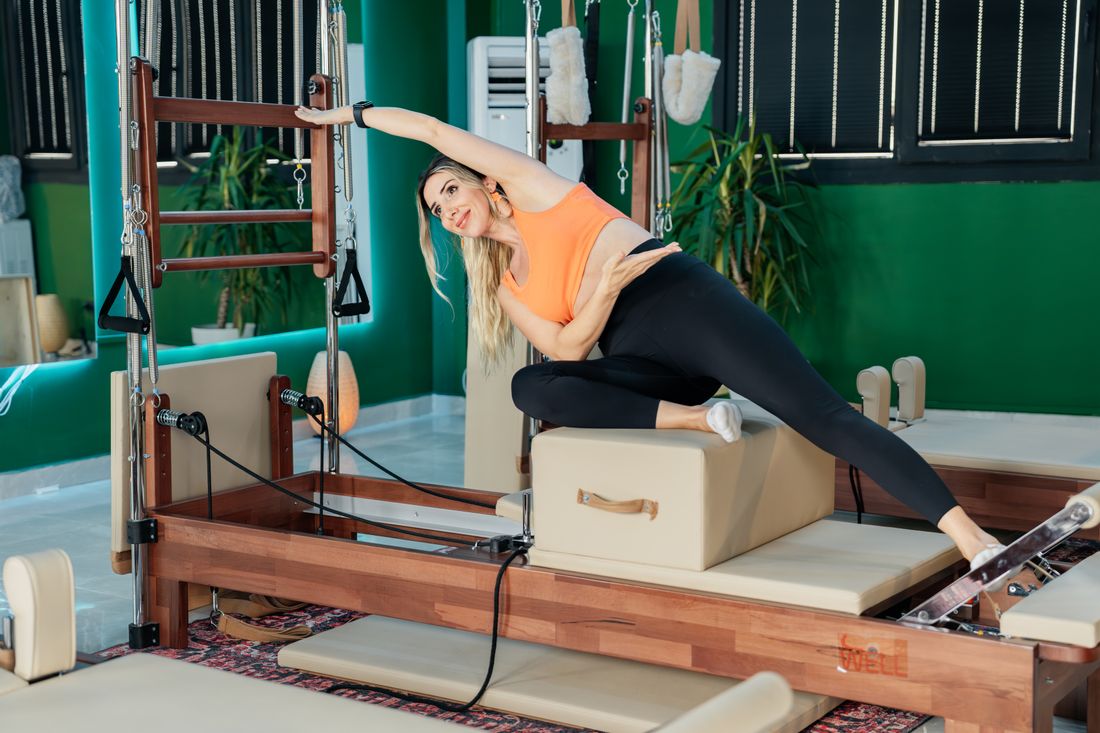
The springs set the resistance. Counter-intuitively, heavier springs do not always make an exercise harder. For some movements a lighter spring gives you less support and demands more control. Your instructor will tell you what to use, and you should feel free to ask again if you lose track.
Expect cues about breathing and alignment that may feel unfamiliar: "neutral spine", "imprint", "ribs down". You do not need to understand them all in one session. Focus on moving slowly and keeping control of the carriage. It should never slam back against the stopper.
Telling your instructor about injuries
This is the most important part of your first class. Before you start, tell the instructor about:
- Any current pain, especially in your back, neck, shoulders, hips or knees
- Recent surgery or injury, even if you feel recovered
- Pregnancy or recent childbirth
- Conditions such as high blood pressure, osteoporosis or hypermobility
- Anything your doctor or physiotherapist has told you to avoid
Most studios ask you to fill in a health questionnaire. Be honest. An instructor can only modify an exercise if they know there is a reason to. Even NHS physiotherapy-led Pilates classes ask participants to tell the instructor if they feel unwell or are in particular pain before the class begins.
Pilates is often recommended for back pain, and a Cochrane review found low to moderate quality evidence that it helps pain and disability more than minimal intervention. However, it did not find Pilates clearly better than other forms of exercise. If you have an ongoing injury or significant pain, a general group class may not be the right starting point. Clinical Pilates in Bangkok explains when a physiotherapist-led session makes more sense.
During class, discomfort from effort is normal. Sharp pain, pins and needles, numbness or pain that shoots down a limb is not. Stop and tell the instructor.
Soreness after your first reformer class
Many beginners feel some soreness a day or two later, often in the inner thighs, glutes, abdominals and the backs of the arms. This is delayed onset muscle soreness (DOMS). According to Cleveland Clinic, it typically starts one to three days after unaccustomed or intense exercise and rarely lasts more than five days.
Light movement, such as walking or gentle stretching, usually helps more than complete rest. You do not need to book an expensive recovery treatment for normal soreness after a first class. If you are curious about adding one later, our guide to your first recovery session in Bangkok covers what to expect.
See a doctor if you notice:
- Dark or bloody urine
- Severe swelling around a muscle
- Sharp, constant pain, or pain that lasts more than a week
- Being unable to move or use part of your body
These are rare after a beginner class, but they can signal something more serious than ordinary soreness.
Booking and cancellation rules
Studio policies are often stricter than gym policies, because a reformer class has a fixed number of machines. Before buying anything, check:
- Cancellation window. Most studios set a minimum notice period, stated in hours. Late cancellations or no-shows often forfeit the class credit.
- Late arrival. Some studios close the door a few minutes after the start, because joining mid-warm-up on a spring-loaded machine is unsafe.
- Pack expiry. Intro offers and class packs usually expire, sometimes within a few weeks. Work out whether you can realistically use them in time.
- Waitlists. Popular after-work slots fill quickly. Ask how the waitlist works and whether you are charged if a spot opens late.
- Booking app. Many Bangkok studios use their own app or a third-party booking platform. Check whether the app and its notifications are available in English.
Read the terms in full before you pay for a pack. If something is unclear, ask the studio to confirm it in writing by message.
Frequently asked questions
Do I need grip socks?
At most reformer studios, yes. They stop your feet slipping on the footbar and platform and keep shared equipment cleaner. Many studios sell them at the front desk, but ask when you book so you are not caught out.
Can I do Pilates if I'm not flexible?
Yes. Pilates does not require flexibility to start, and instructors can adjust the springs, footbar and range of movement to suit you. Tell your instructor if certain positions feel restricted rather than forcing them.
How many classes should a beginner do per week?
Two sessions a week is a common starting point and leaves time for soreness to settle. Some people start with one and add more once the movements feel familiar. Consistency over several weeks matters more than the number in any one week.
Is reformer Pilates suitable during pregnancy?
It can be for some people, but you should check with your doctor or midwife first and tell the studio before booking. Many exercises need modification as pregnancy progresses, so an instructor with specific pre- and postnatal training is preferable.
Related guides
- Reformer Pilates guide
- Reformer vs mat Pilates: which to start with
- Clinical Pilates in Bangkok
- Compare Bangkok Pilates studios
- Your first recovery session in Bangkok
This guide is general information, not medical advice. Prices and services change; confirm details directly with the provider. See our editorial methodology and medical disclaimer.
Sources (checked October 2026)
- How much does it cost to run a Pilates studio in Thailand? 2026 guide — Vibefam
- Pilates for low back pain (Cochrane review, Yamato et al., 2015) — PEDro record
- Delayed onset muscle soreness — Cleveland Clinic
- Physiotherapy Pilates: before you start — Wirral University Teaching Hospital NHS
What do you want to compare next?
Choose the question that matters most. Each option opens a relevant practical guide — no account or form required.
Independent guidance, not a diagnosis or confirmed booking.